Bare nickel foam
KAUST Academy Energy Specialization Summer Internship Program
Electrochemical Evaluation of Self-Supported NiFe-LDH Electrocatalysts for Alkaline Urea Oxidation
A comparative investigation of binder-free NiFe-LDH-type anodes for lowering the anodic potential required during alkaline urea-assisted electrolysis.
Sultan Sarhan Alhayyani
Mentor: Prof. Guanjie He
KAUST Academy × UCL Chemistry

Project overview
Why Investigate Urea Oxidation?
Conventional alkaline water electrolysis couples hydrogen evolution at the cathode with oxygen evolution at the anode. Oxygen evolution is a demanding multistep reaction and can account for a substantial part of the practical cell voltage. Replacing it with the oxidation of a waste-derived molecule may reduce the required anodic potential while creating an opportunity for simultaneous chemical remediation.
Urea is present in urine, agricultural effluents, and several industrial waste streams. Its ideal six-electron oxidation offers a theoretical pathway for urea-assisted hydrogen production at a lower thermodynamic cell voltage than conventional water splitting. These theoretical values, however, do not represent measured energy savings. Urea oxidation is chemically complex, and oxygen evolution can remain competitive, particularly at higher anodic potentials.
Research questionCan a self-supported NiFe-LDH-type coating enable useful anodic current at lower potential, and which tested electrode configuration provides the strongest overall performance?
Experimental approach
A Controlled Comparison of Three Complete Anodes
NiFe-LDH-type coating on nickel foam
NiFe-LDH/NF
NiFe-LDH-type coating on iron mesh
NiFe-LDH/Fe mesh
Each complete electrode configuration was evaluated at room temperature in 1 M KOH and in 1 M KOH containing 0.33 M urea. The nominal exposed geometric area was 1.00 cm².
The coating was prepared using a seed-assisted route and grown directly on nickel foam or iron mesh at 25 °C for 24 hours. This self-supported architecture avoided polymer binders and added conductive carbon.
The evaluation combined scanning electron microscopy, cyclic voltammetry, forward-scan linear sweep voltammetry, electrochemical impedance spectroscopy, and a constant-current experiment. Reported polarization potentials were converted to the reversible hydrogen electrode scale and corrected for 90% of the fitted series-resistance contribution.
- 1Substrate preparation
- 2Seed-assisted growth
- 3Washing and vacuum drying
- 4Morphology assessment
- 5Electrochemical comparison
- 6Evidence-weighted interpretation
Morphology
A Hierarchical, Self-Supported Coating
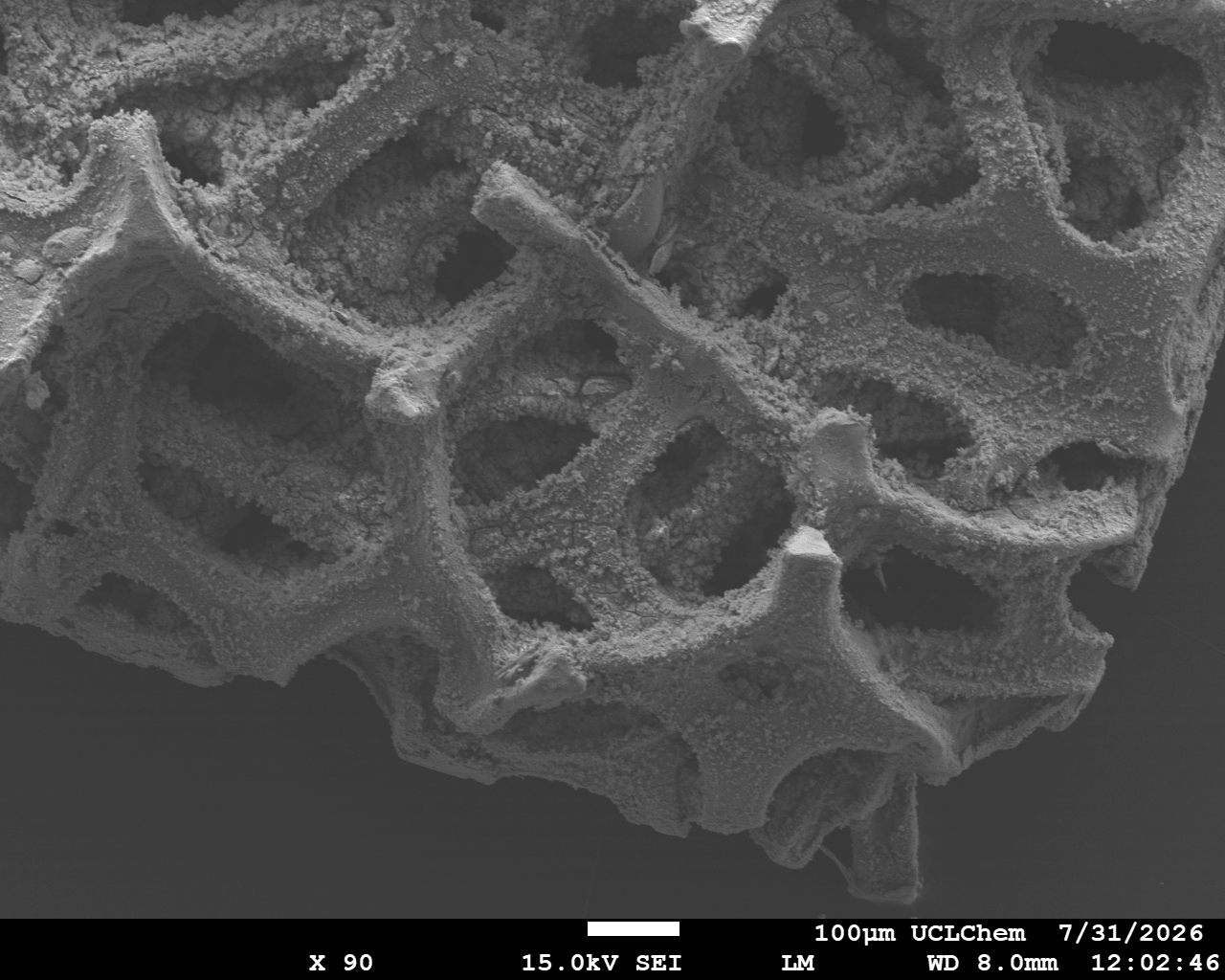
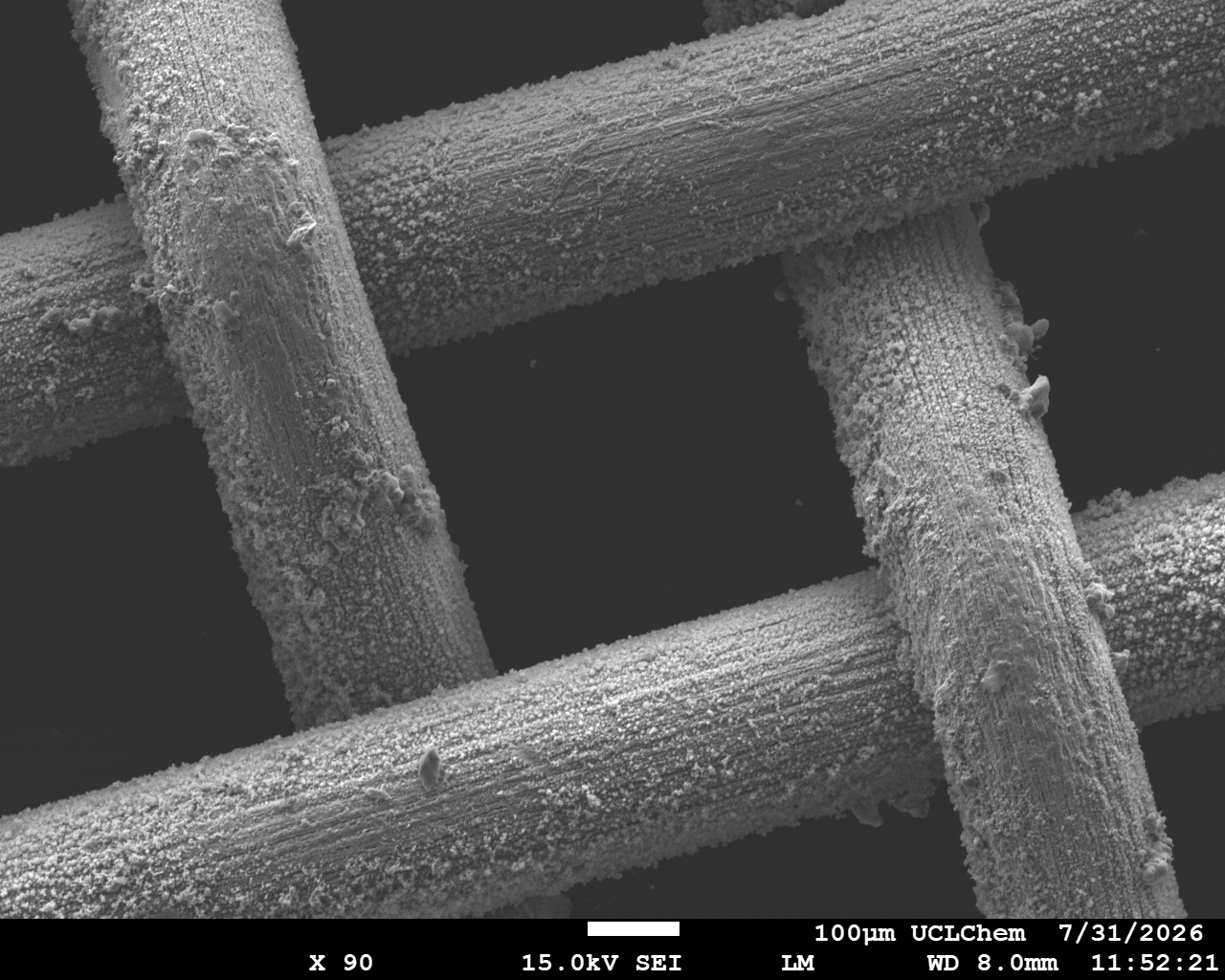
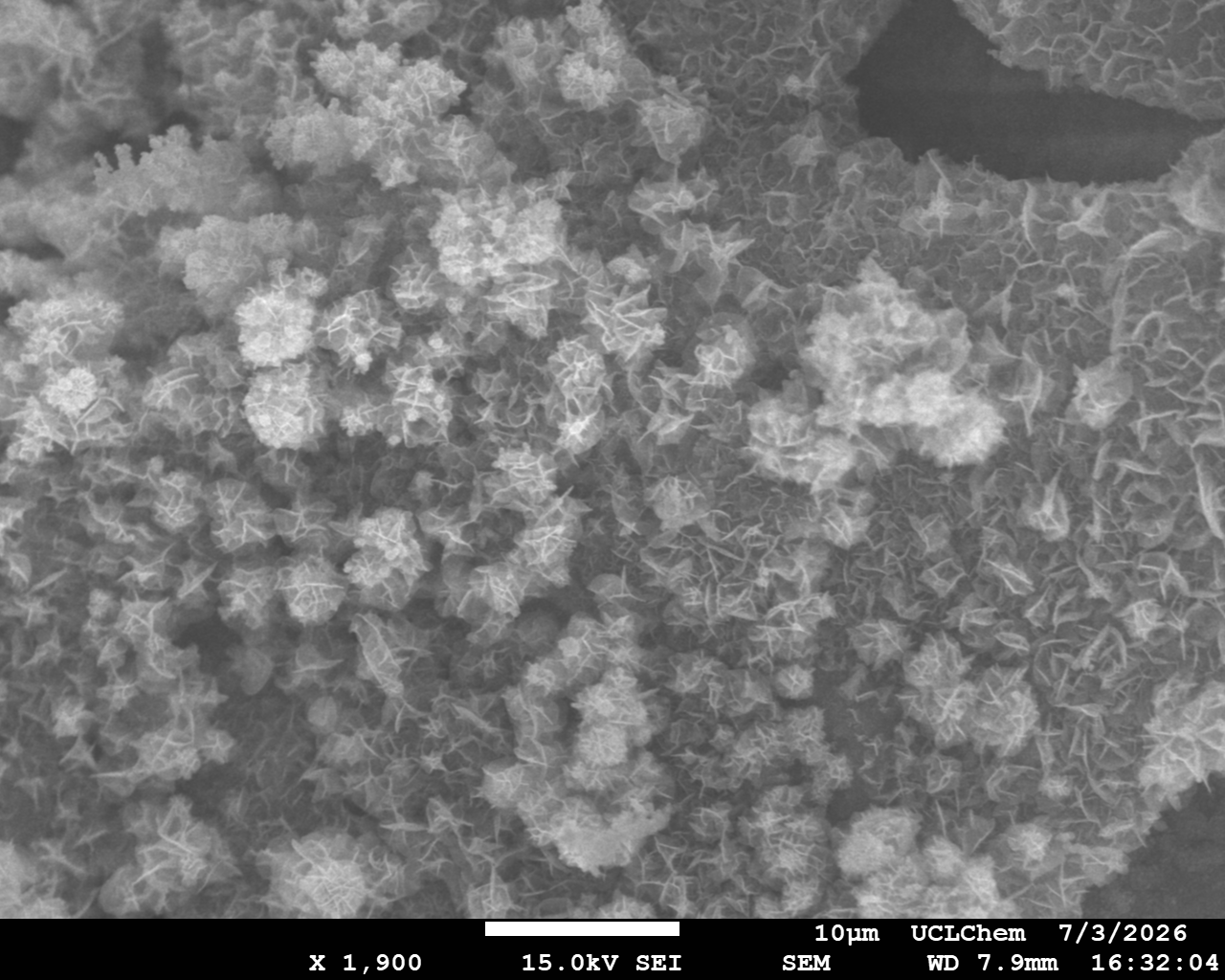
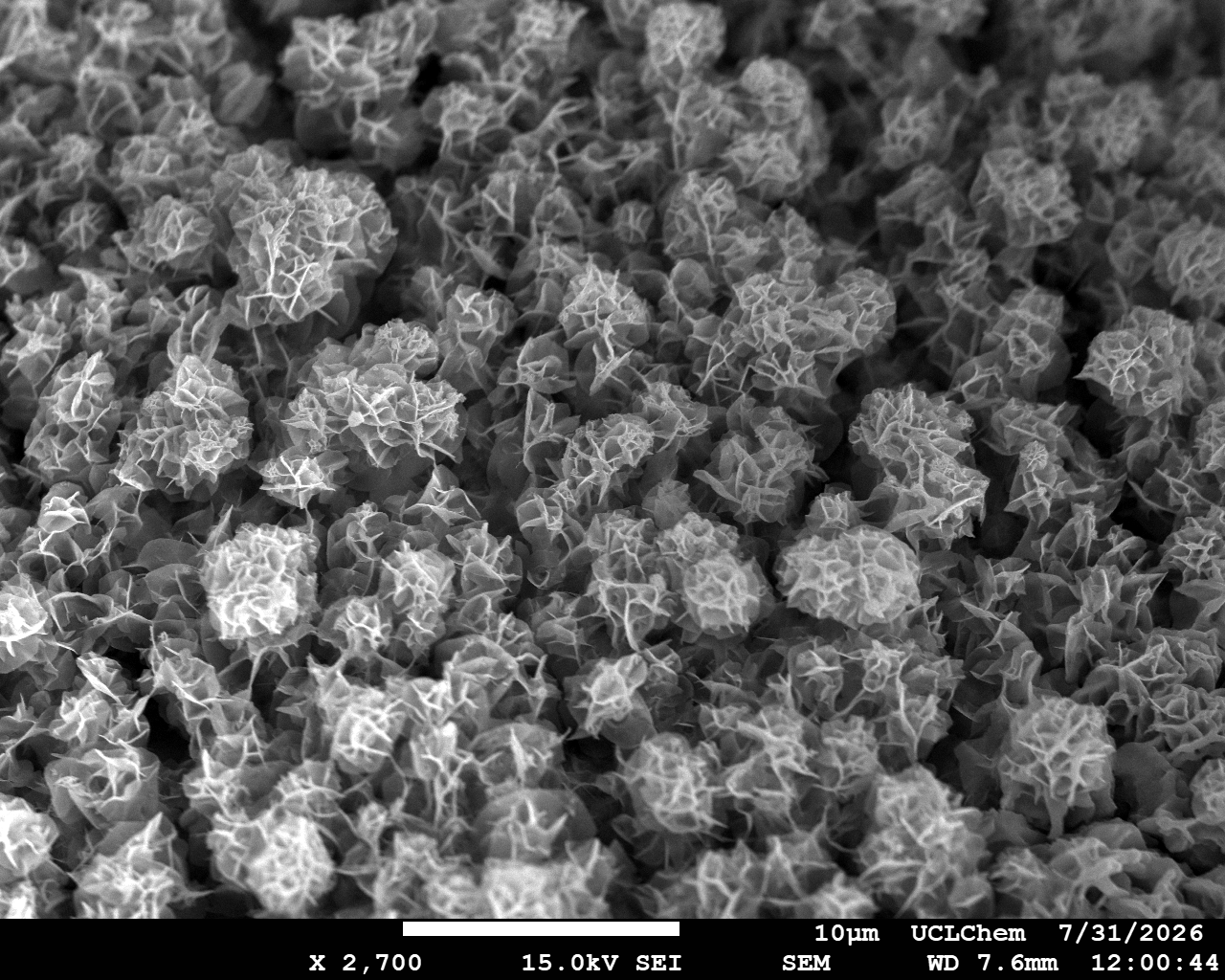
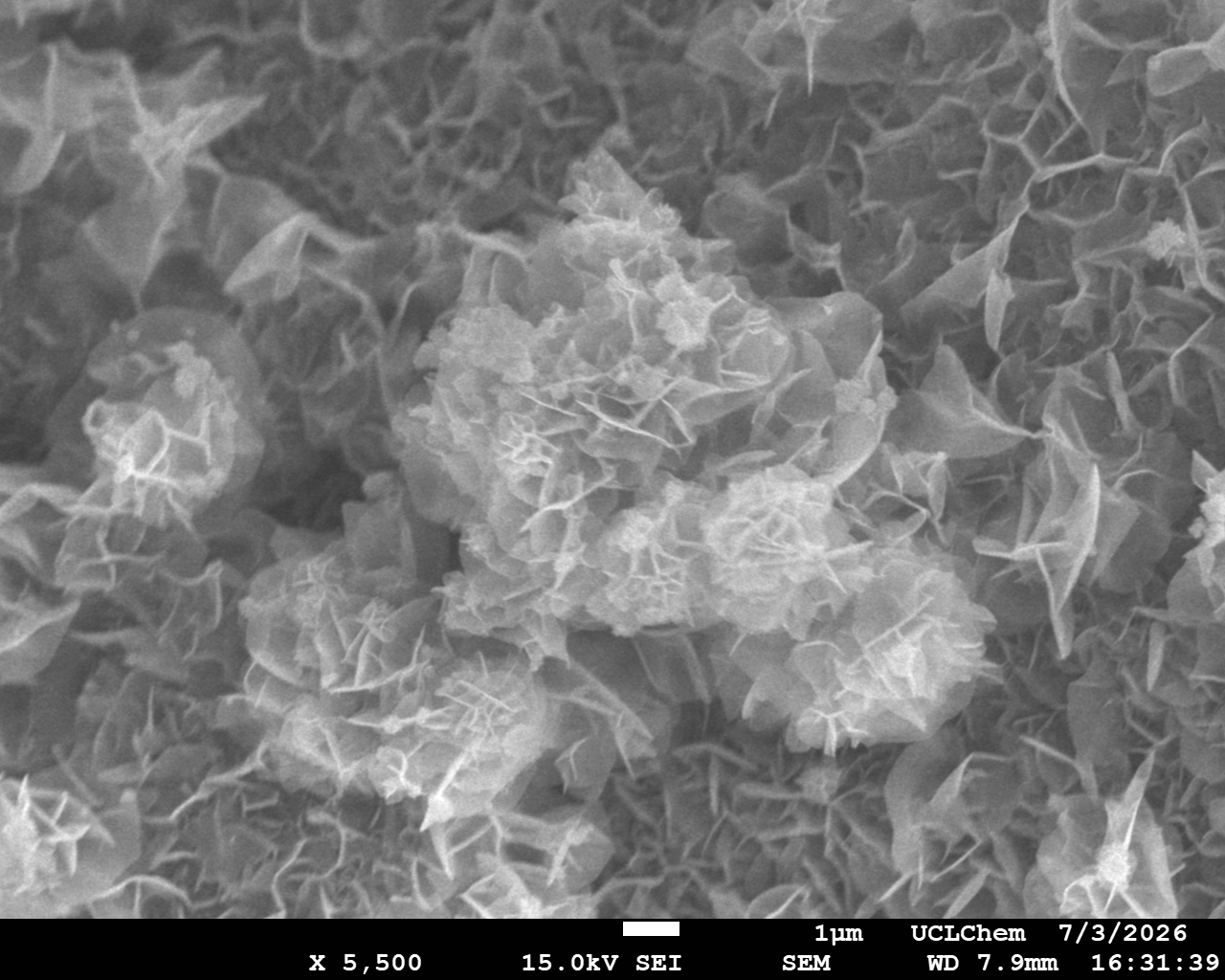
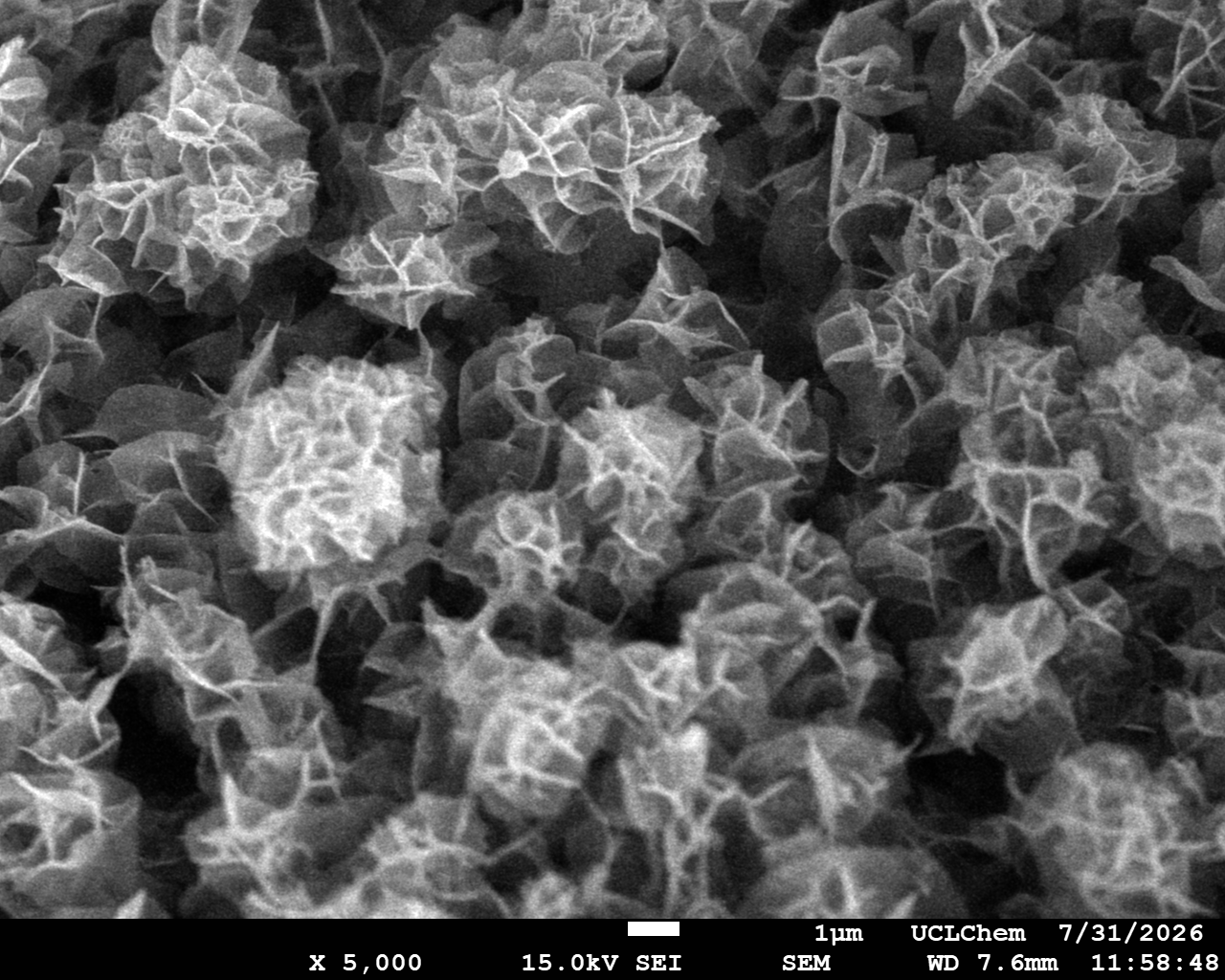
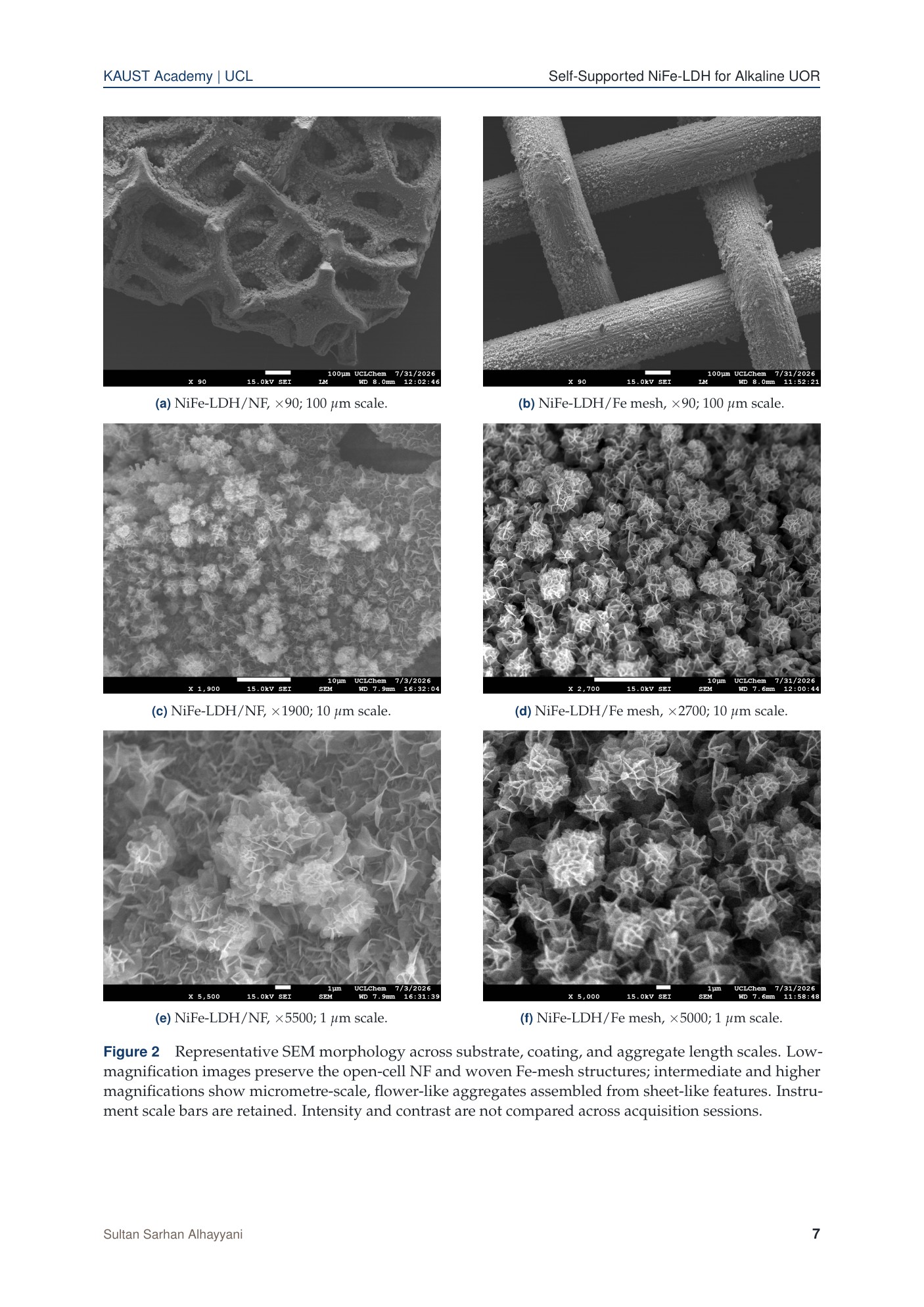
Representative electron-microscopy images showed that the original support architectures remained visible after coating: an open-cell network for nickel foam and a woven wire structure for iron mesh. At higher magnification, both coated substrates displayed micrometre-scale flower-like aggregates assembled from sheet-like features.
This open morphology may support electrolyte access and gas release, but the images provide qualitative evidence only. They do not independently establish catalyst loading, active surface area, coating thickness, elemental composition, oxidation state, or crystallographic phase.
Primary result
The Most Promising Tested Configuration
Most promising tested configuration
NiFe-LDH/NF
1.409 V vs RHE
at 100 mA cm⁻² in 1 M KOH + 0.33 M urea
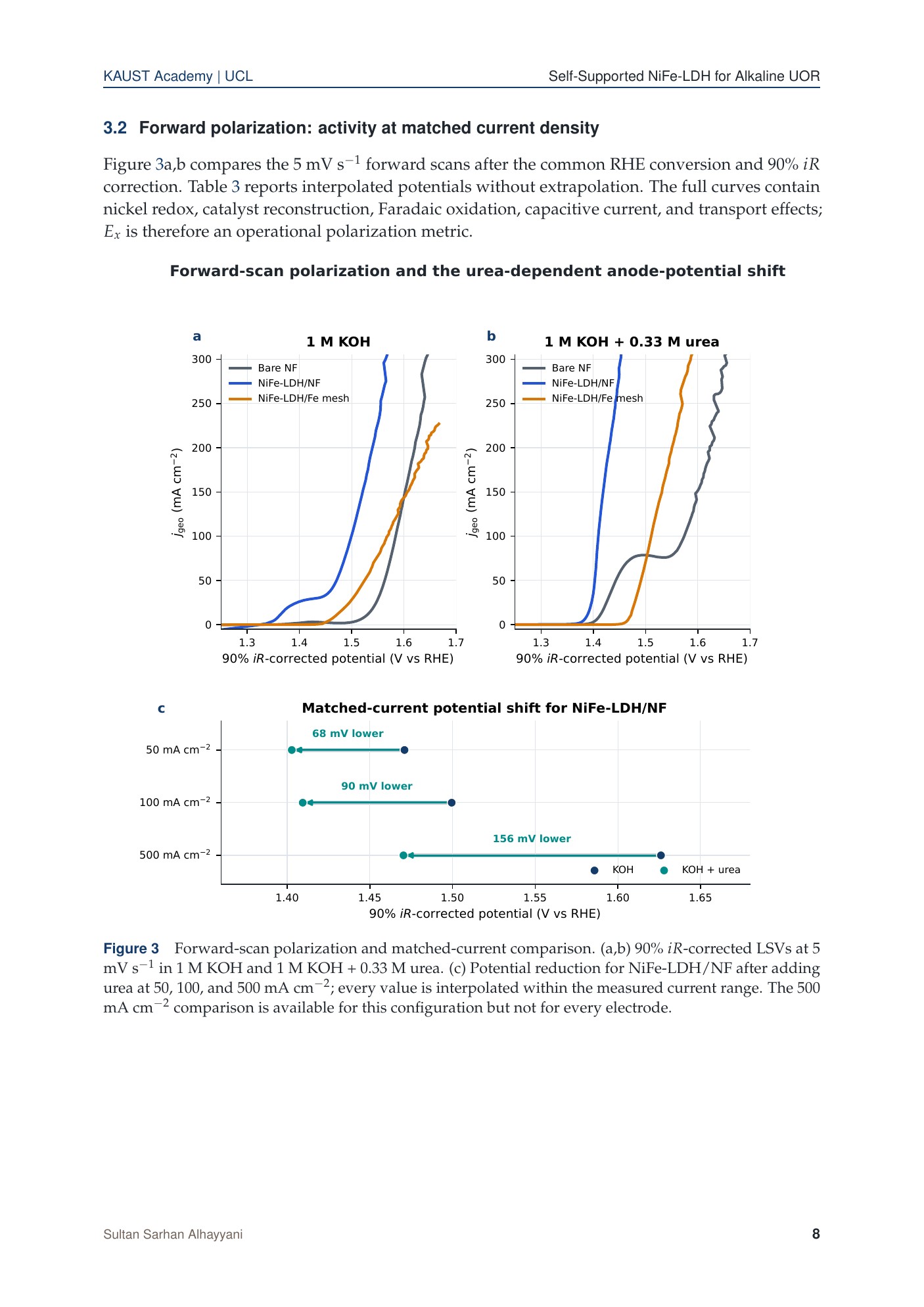
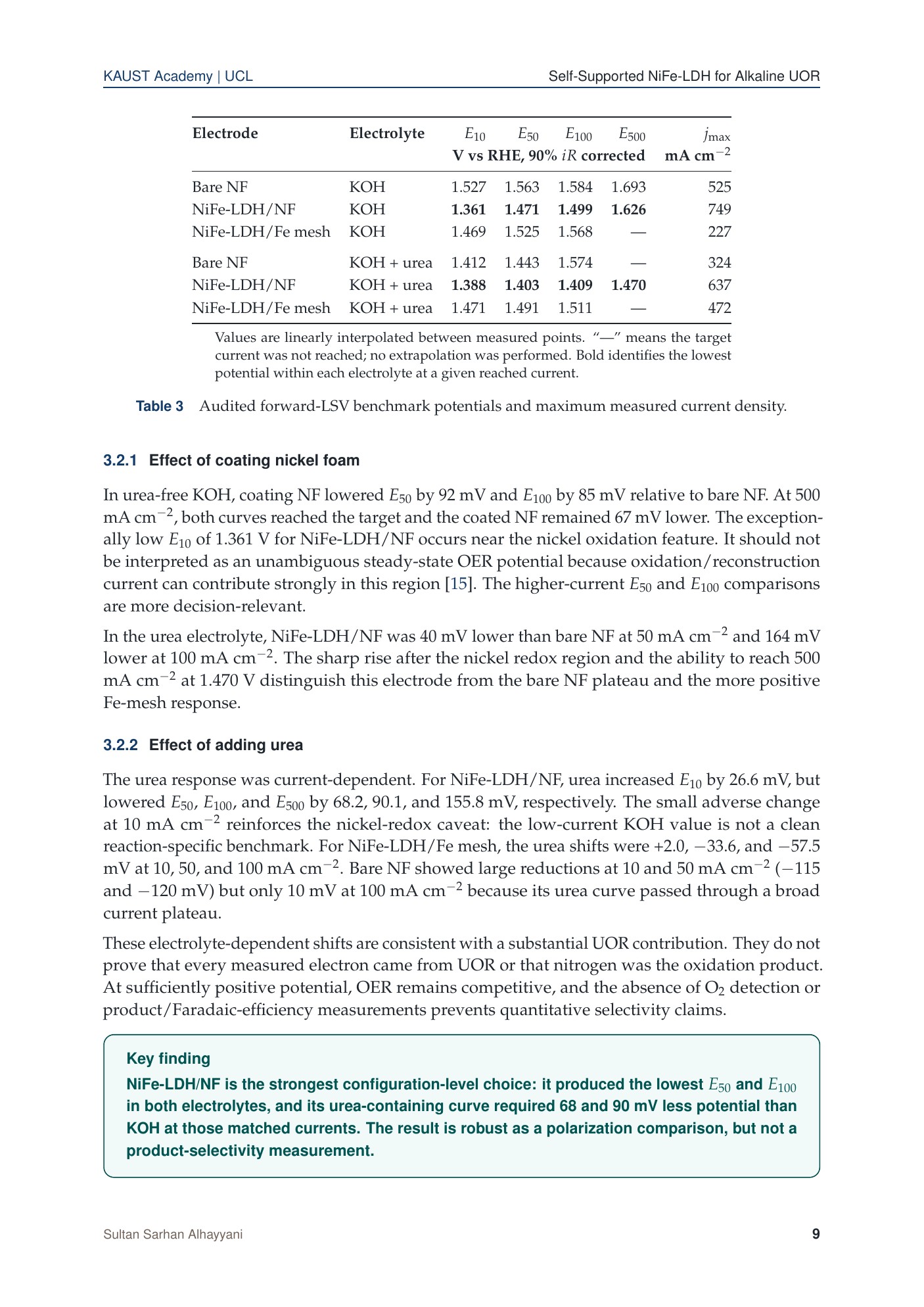
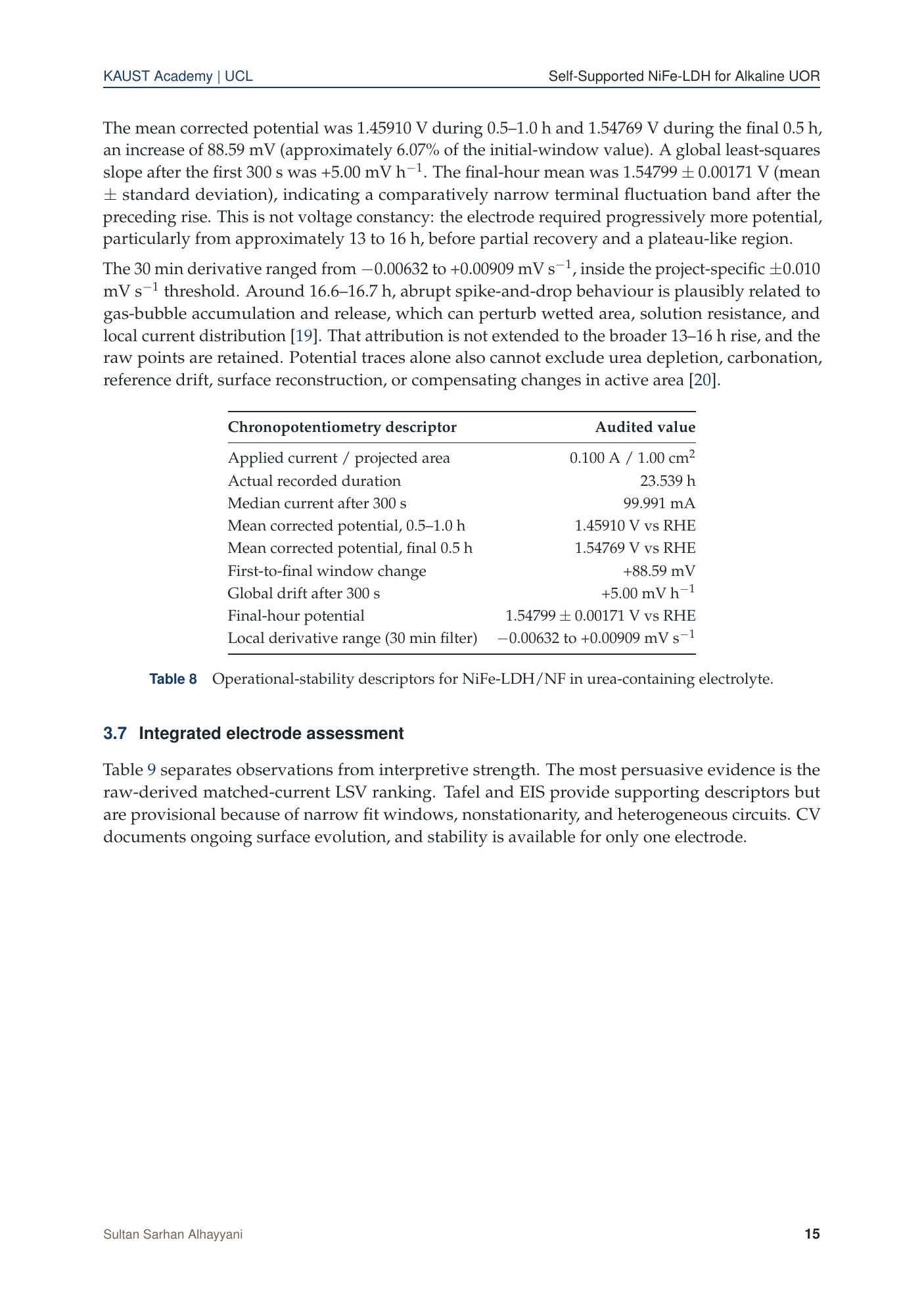
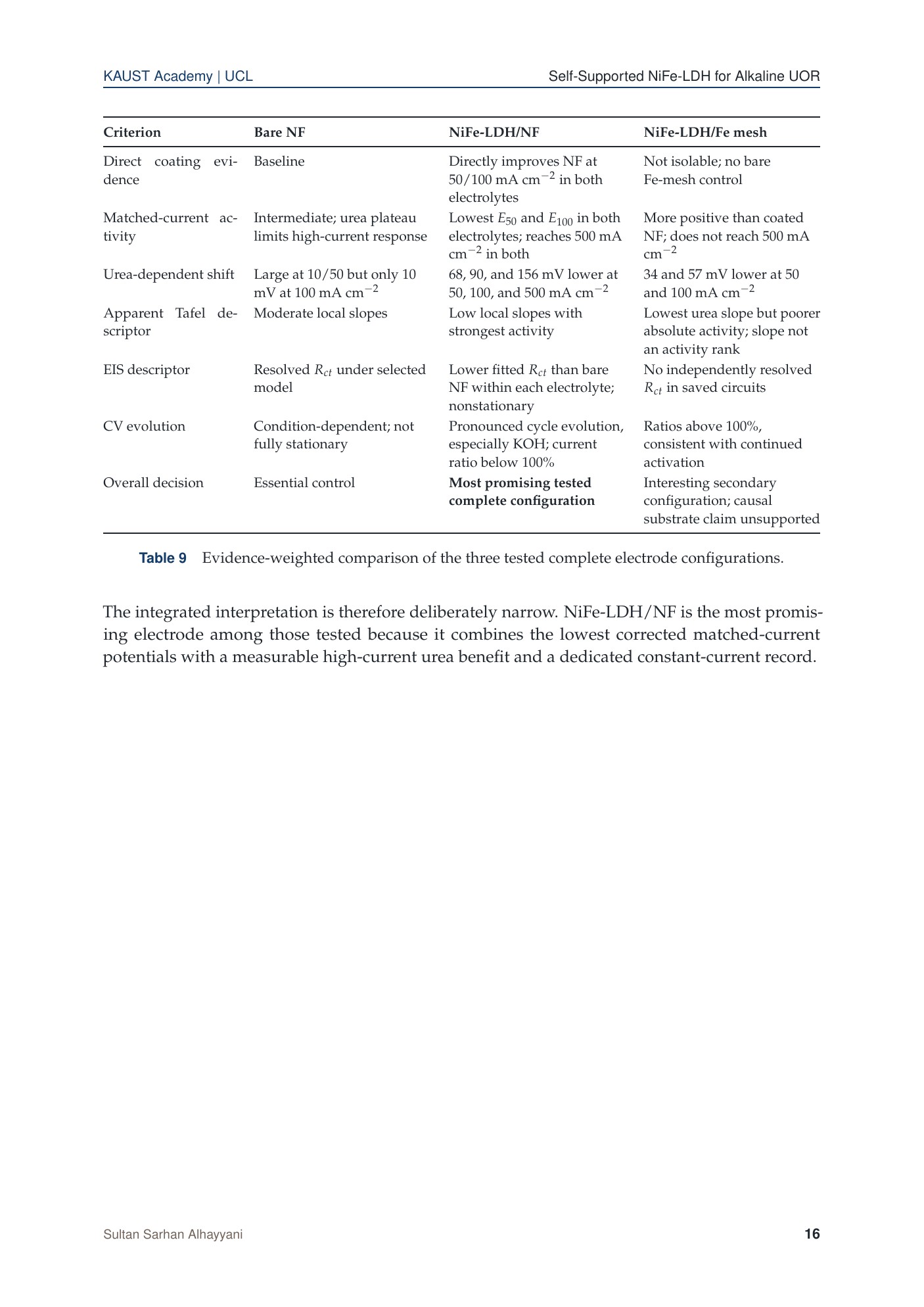
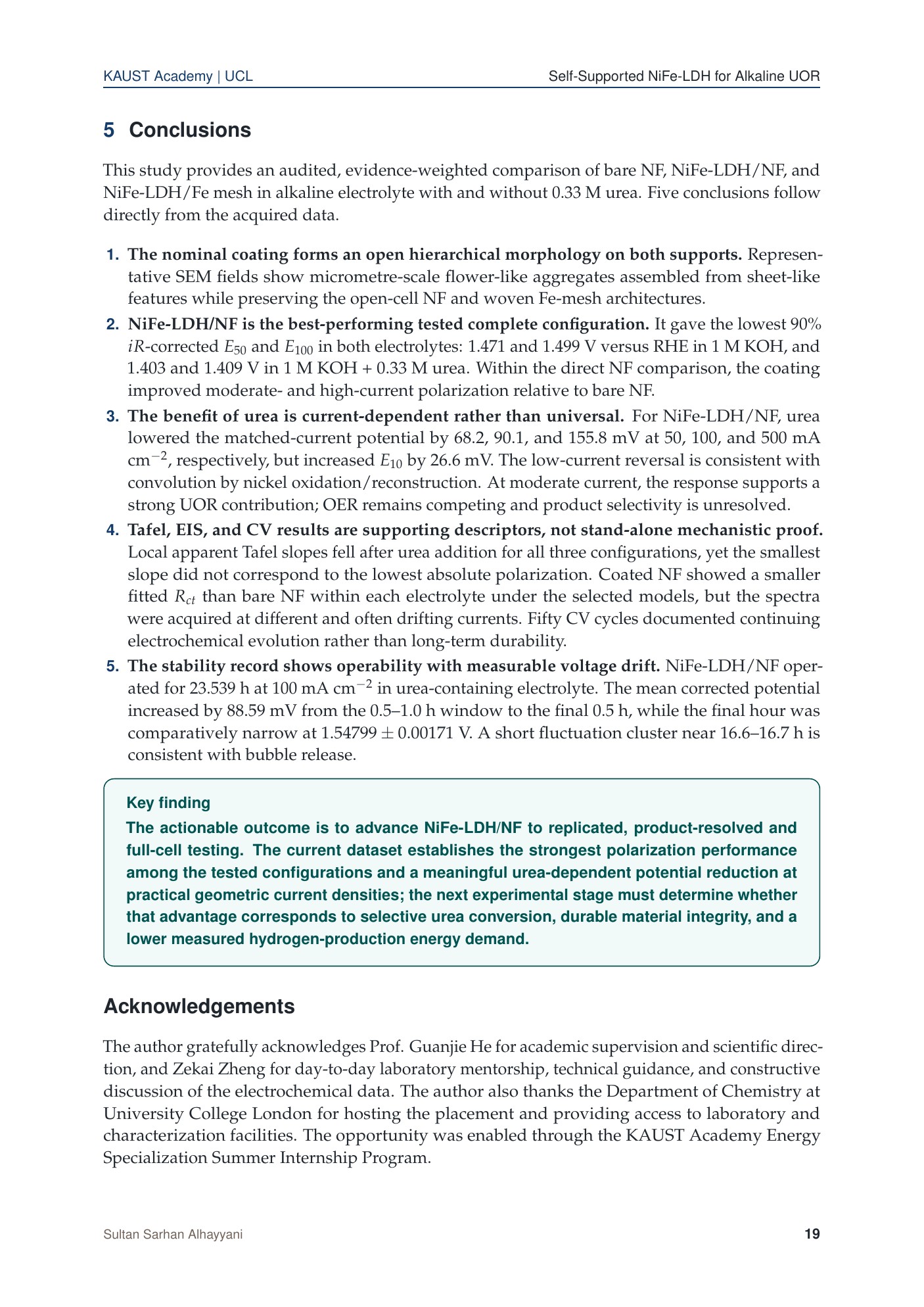
NiFe-LDH/NF required the lowest 90% iR-corrected potential at 100 mA cm⁻² among the tested complete electrode configurations. Under the same urea-containing condition, it operated 164 mV below bare nickel foam, directly demonstrating the benefit of coating the nickel-foam electrode.
When the electrolyte comparison was made on the same NiFe-LDH/NF electrode, adding urea reduced the matched-current potential from 1.499 to 1.409 V at 100 mA cm⁻², corresponding to a 90.1 mV reduction.
Supporting findings
What the Comparative Measurements Showed
Coating Effect
164 mV lower
At 100 mA cm⁻² in the urea-containing electrolyte, NiFe-LDH/NF required 164 mV less potential than bare nickel foam.
Urea Effect
90.1 mV lower
For NiFe-LDH/NF at 100 mA cm⁻², adding 0.33 M urea reduced the required potential from 1.499 to 1.409 V vs RHE.
High-Current Comparison
155.8 mV lower
At 500 mA cm⁻², the matched-current potential of NiFe-LDH/NF decreased from 1.626 V in KOH to 1.470 V after urea addition.
Recorded Operation
23.539 h
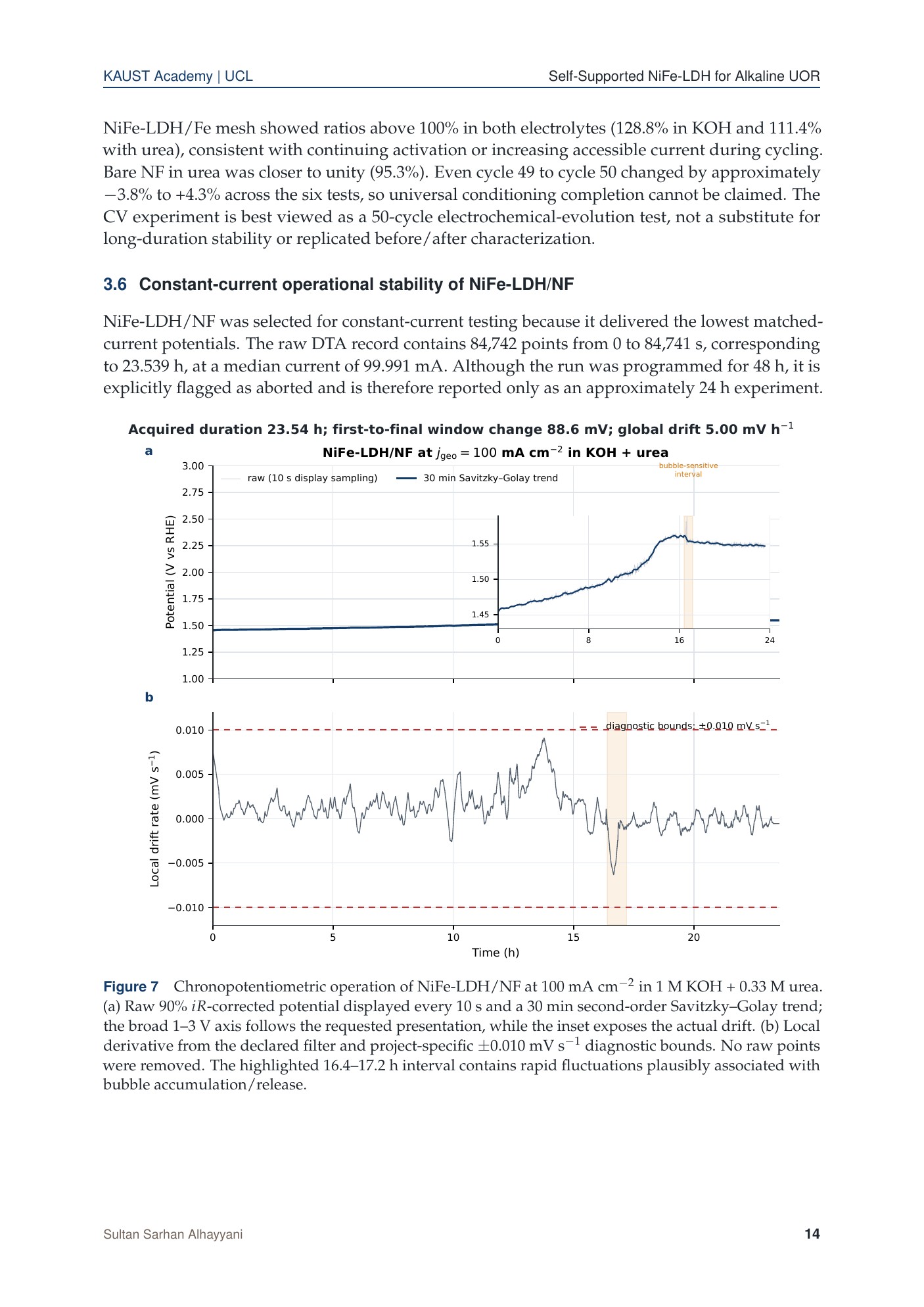
NiFe-LDH/NF was operated at 100 mA cm⁻² in the urea-containing electrolyte, providing an initial operational record with measurable voltage drift.
Evidence-weighted interpretation
The forward-polarization results provide the strongest evidence in this study. They show that NiFe-LDH/NF combined the lowest moderate-current potentials with a meaningful urea-dependent reduction in anodic polarization. The response is consistent with a substantial urea-oxidation contribution, but electrochemical current alone cannot determine the reaction products or separate urea oxidation quantitatively from competing oxygen evolution.
Operational record
Operation with Measurable Voltage Drift
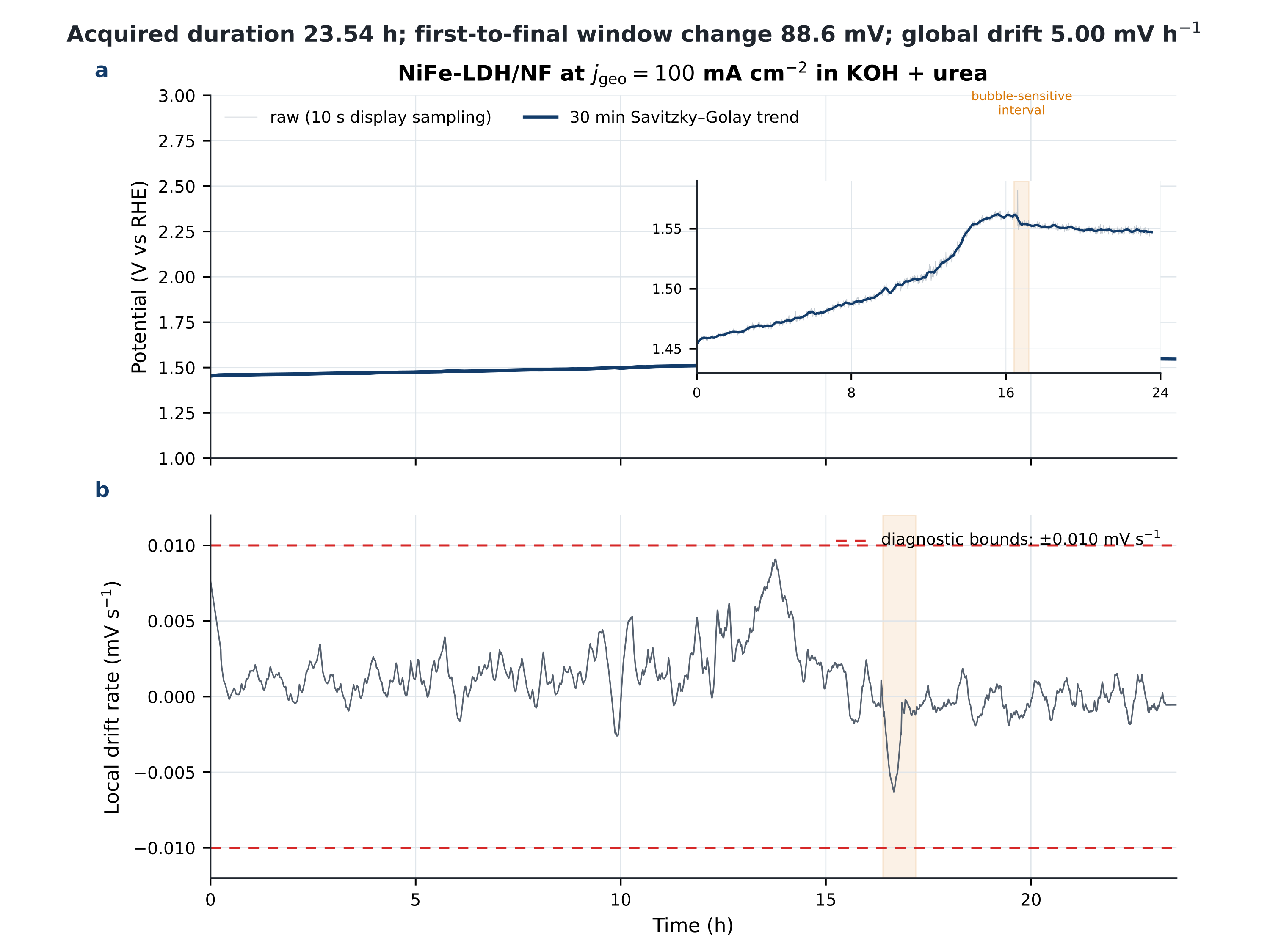
NiFe-LDH/NF was selected for constant-current evaluation because it provided the strongest matched-current polarization performance. The recorded experiment lasted 23.539 hours at a median current of 99.991 mA.
The mean corrected potential increased from 1.45910 V during the 0.5–1.0 hour window to 1.54769 V during the final 0.5 hours. This represents an 88.59 mV increase, with a record-wide linear drift of +5.00 mV h⁻¹ after the first 300 seconds.
A short fluctuation cluster near 16.6–16.7 hours is consistent with gas-bubble accumulation and release. This interpretation is not extended to the broader voltage rise. The experiment should be presented as an initial operational assessment, not as proof of long-term stability.
Evidence boundaries
What the Study Establishes — and What It Does Not
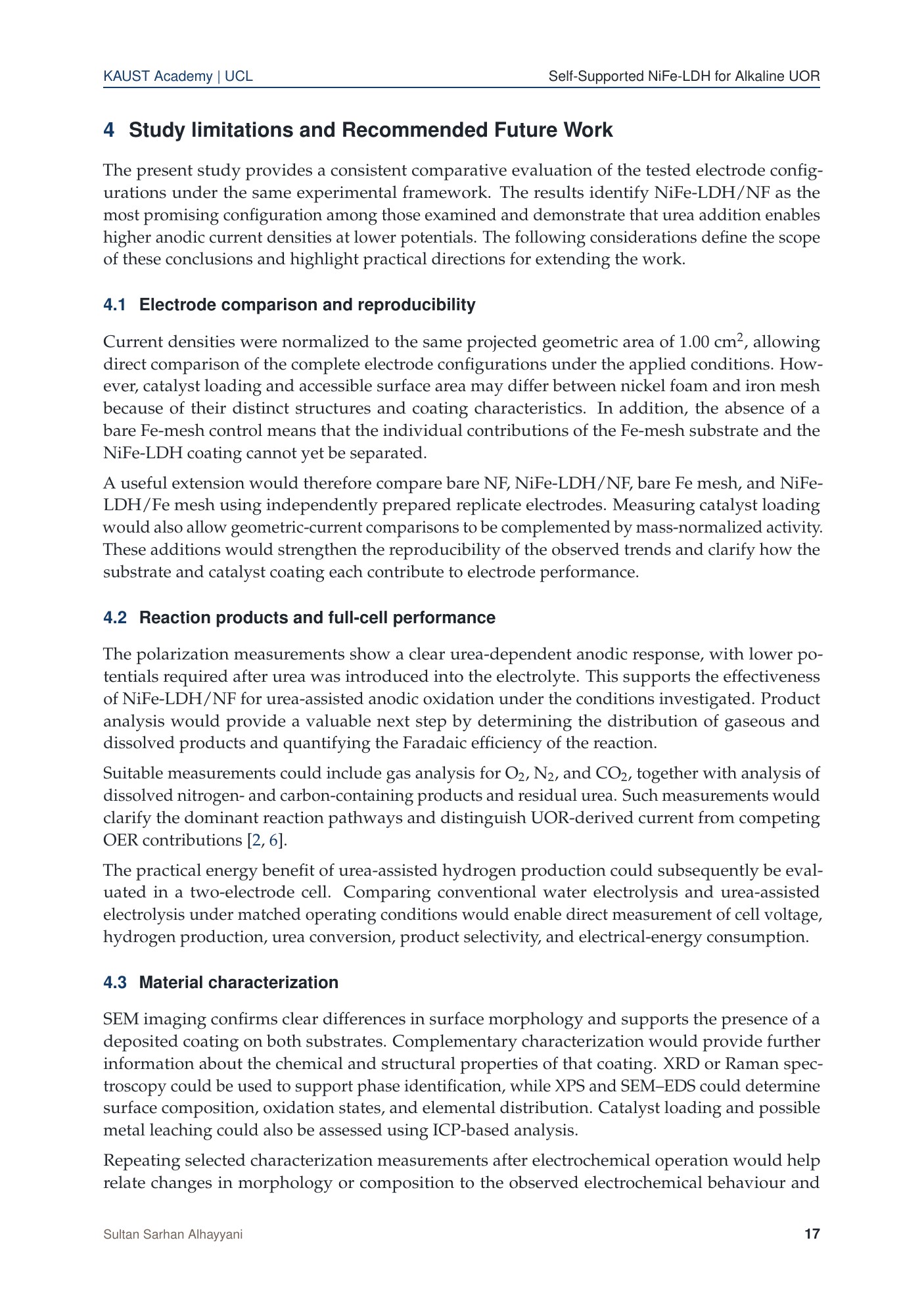
The central conclusion is deliberately evidence-weighted. NiFe-LDH/NF was the strongest complete electrode configuration among those tested, but several questions remain before practical or mechanistic claims can be made.
Independent replicate electrodes were not available for uncertainty analysis.
No bare iron-mesh control was recorded, so the individual effects of the iron substrate and coating cannot be isolated.
Catalyst loading, accessible surface area, wetting, and pore accessibility were not equalized between the different supports.
Product distribution and Faradaic efficiency were not measured.
Oxygen evolution may compete with urea oxidation, particularly at higher anodic potentials.
The NiFe-LDH designation is based on synthesis provenance; phase, composition, oxidation state, and interlayer species were not independently verified.
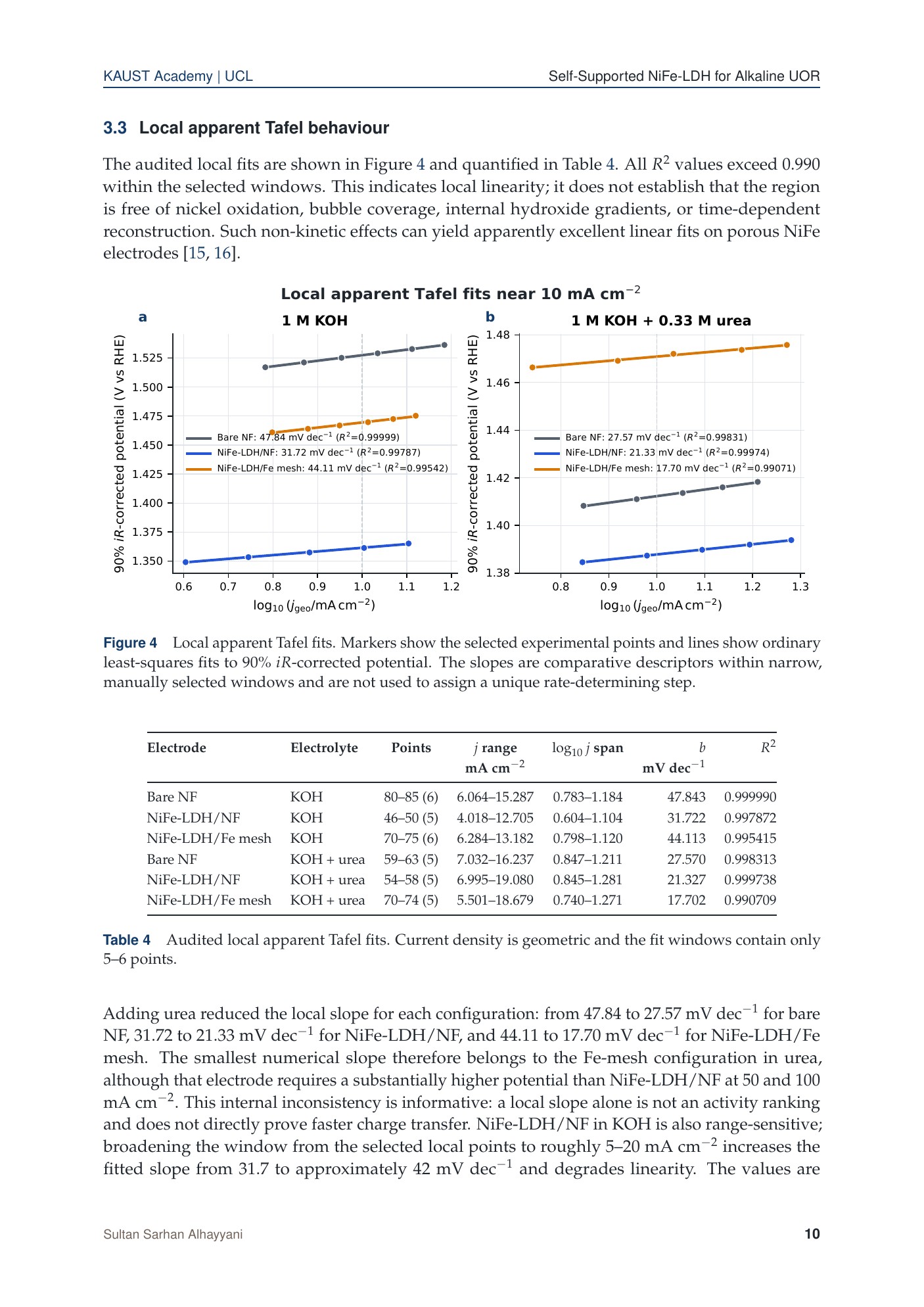
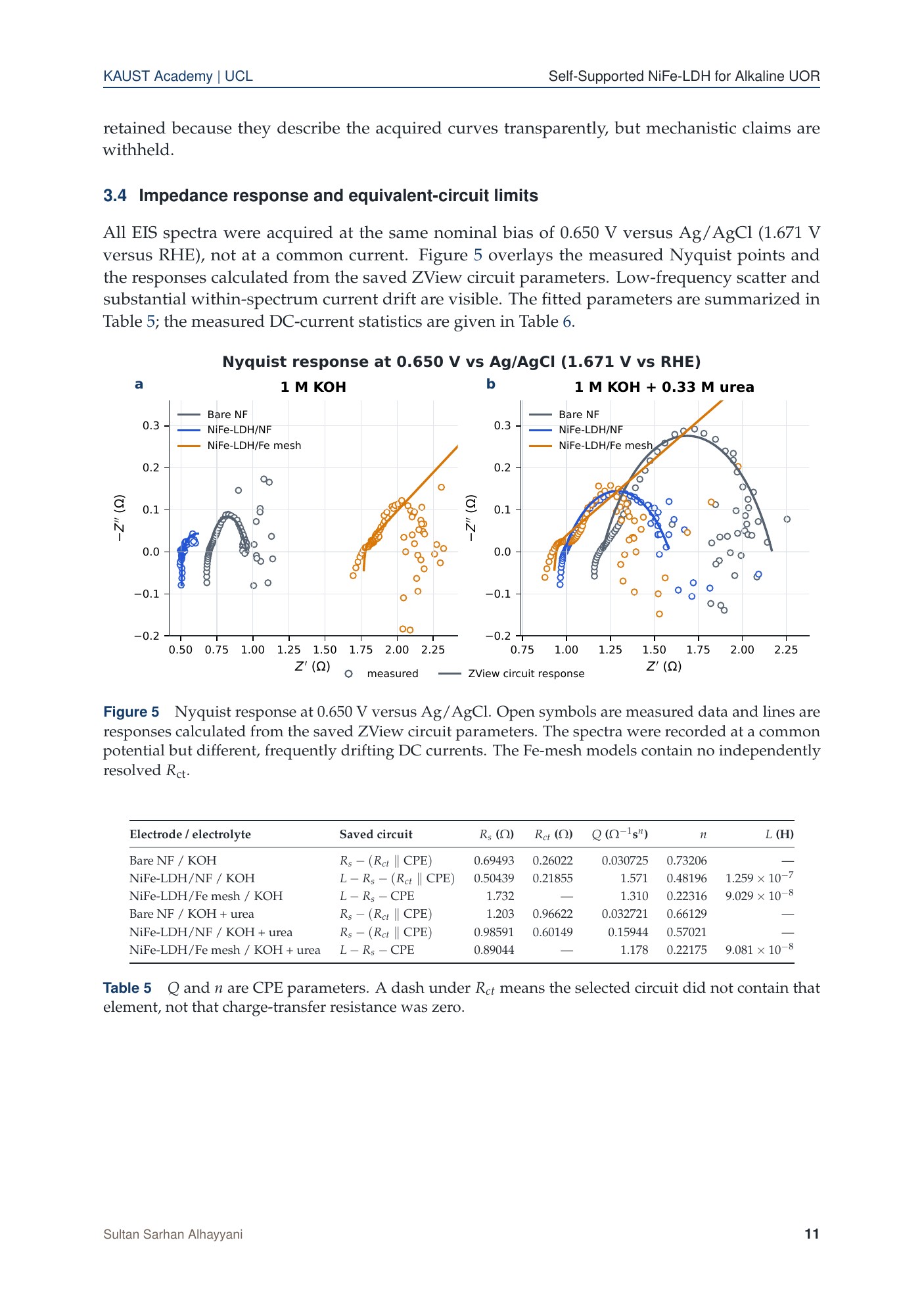
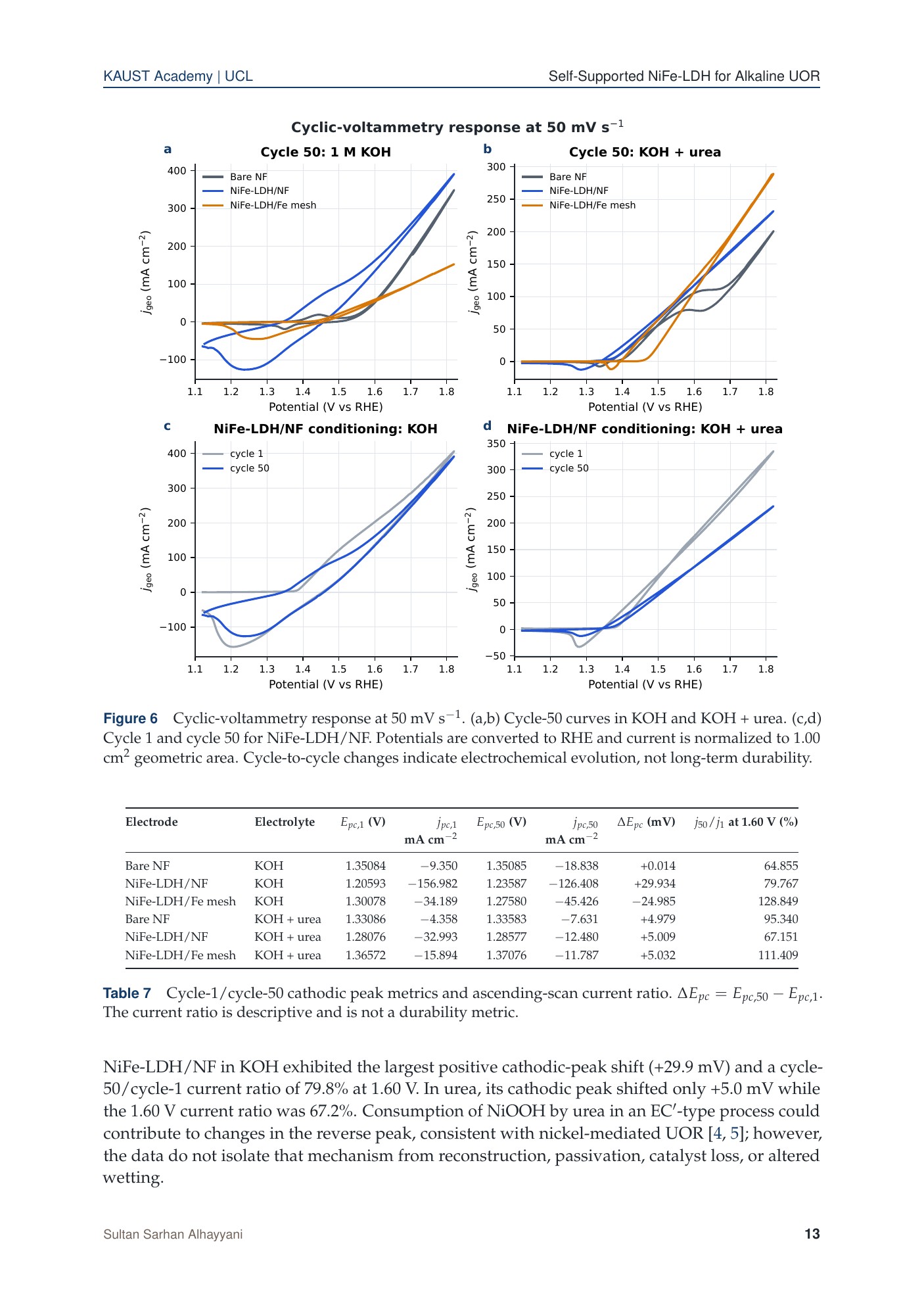
Local apparent Tafel slopes, EIS fits, and CV evolution are supporting descriptors rather than stand-alone mechanistic proof.
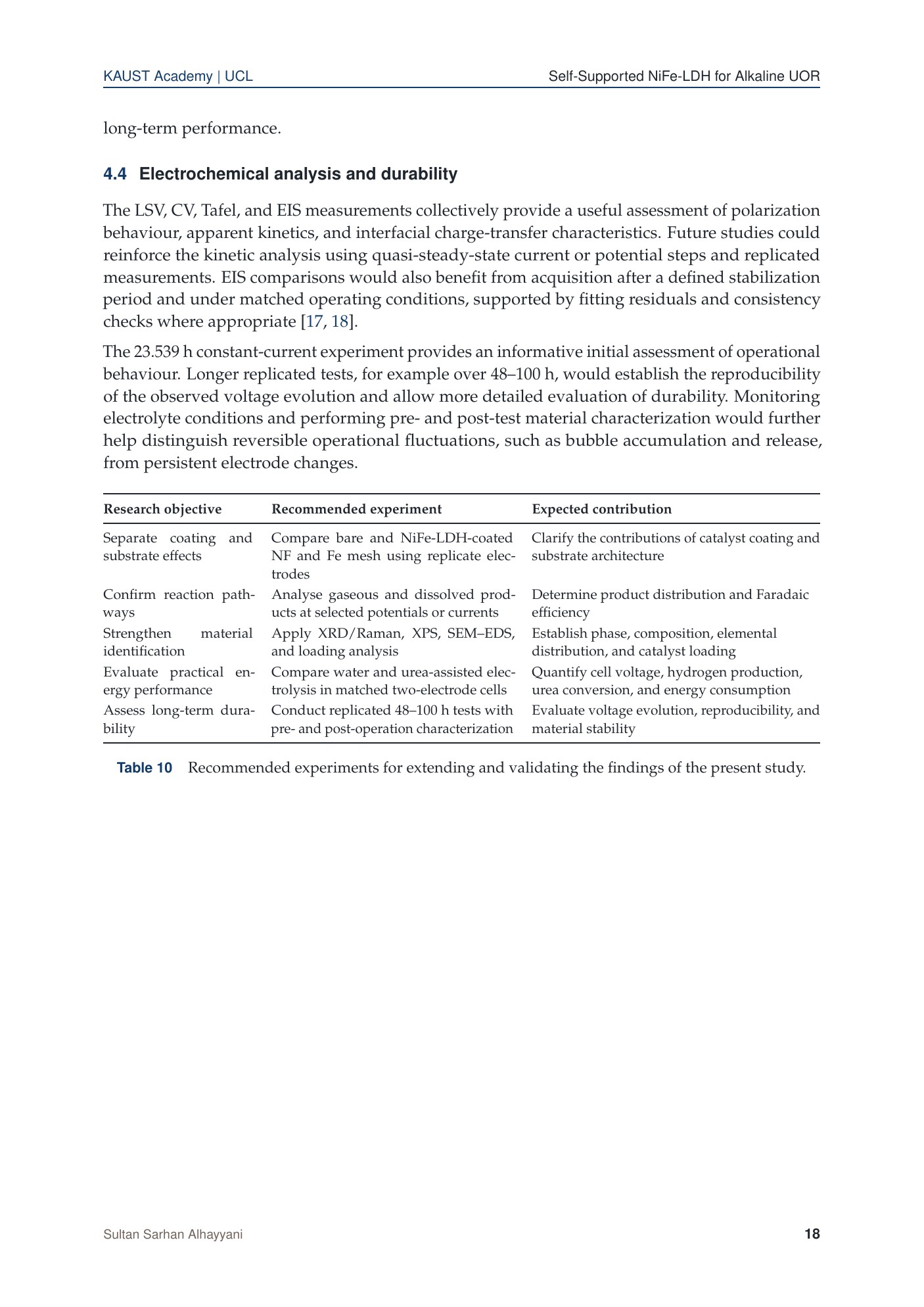
The single 23.539-hour experiment does not establish long-term durability.
Recommended next steps
From Comparative Screening to Validated Performance
Project video
Watch the Project Story
This five-minute research video introduces the motivation, electrode design, experimental approach, principal polarization results, operational record, and evidence boundaries of the study.
Full report
Read the Full Technical Report
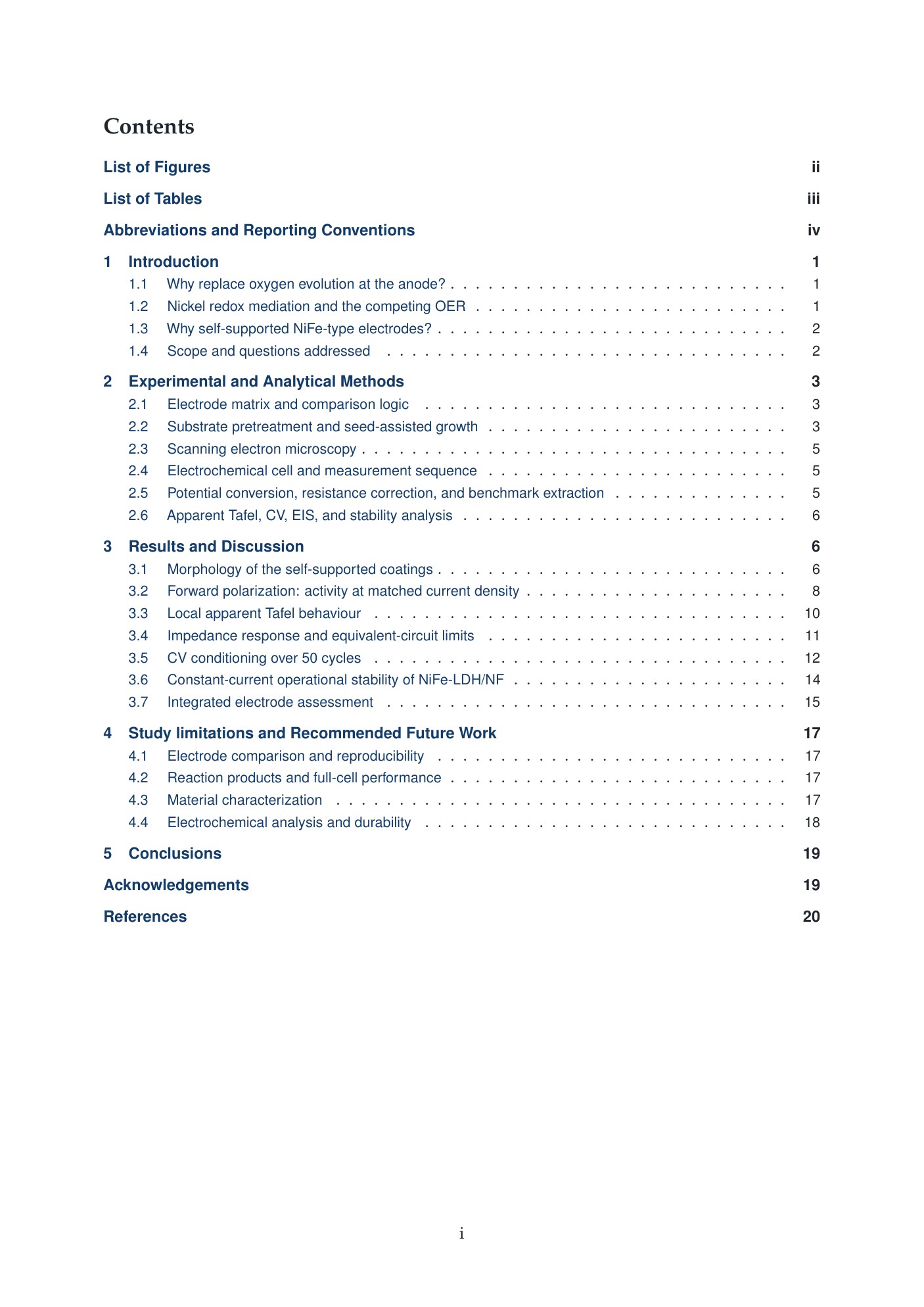
The full technical report documents the experimental framework, analytical conventions, morphology, forward-polarization benchmarks, apparent Tafel analysis, impedance response, cyclic-voltammetry conditioning, constant-current operation, study limitations, and recommended future work.

Researcher
About the Researcher
Sultan Sarhan Alhayyani is a Saudi electrical engineering graduate from Najran University with interests in energy transition, hydrogen, renewable power, electrical infrastructure, and applied energy research. He completed the KAUST Academy Energy Transition Specialization and conducted this electrocatalysis project during a research placement hosted by the Department of Chemistry at University College London.
His work combines an electrical-engineering perspective with experimental research into electrochemical systems relevant to cleaner hydrogen production and waste-assisted energy conversion.
Project support
Acknowledgements
The author gratefully acknowledges Prof. Guanjie He for academic supervision and scientific direction, and Zekai Zheng for day-to-day laboratory mentorship, technical guidance, and constructive discussion of the electrochemical data.
The author also thanks the Department of Chemistry at University College London for hosting the research placement and providing access to laboratory and characterization facilities. The opportunity was enabled through the KAUST Academy Energy Specialization Summer Internship Program.